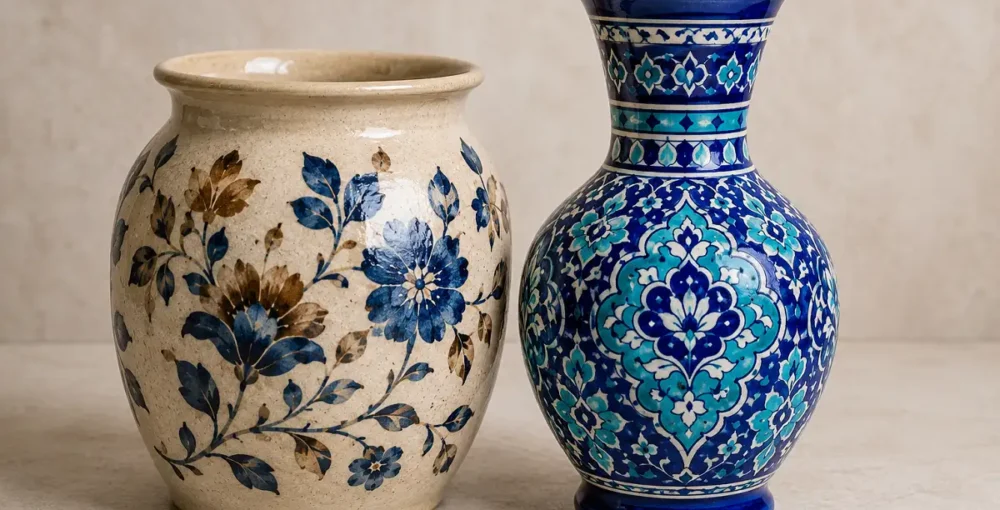
Khurja blue pottery and Jaipur blue pottery are two different crafts that share a blue, hand-painted look. Khurja pottery is clay-based glazed stoneware, fired hotter, so it is durable and safe for everyday use. Jaipur blue pottery uses a no-clay frit body, is low-fired, and is more fragile and decorative. Both are Indian crafts, and both hold GI tags.
Shop Khurja Pottery · Chat on WhatsApp
What is Khurja blue pottery?
Khurja pottery is the glazed ceramic craft of Khurja, a town in Uttar Pradesh known as India’s Ceramic City. It is famous for hand-painted floral and vine motifs, traditionally in blue and brown, set on a warm off-white ground. When people say “Khurja blue pottery,” they usually mean these blue-painted pieces.
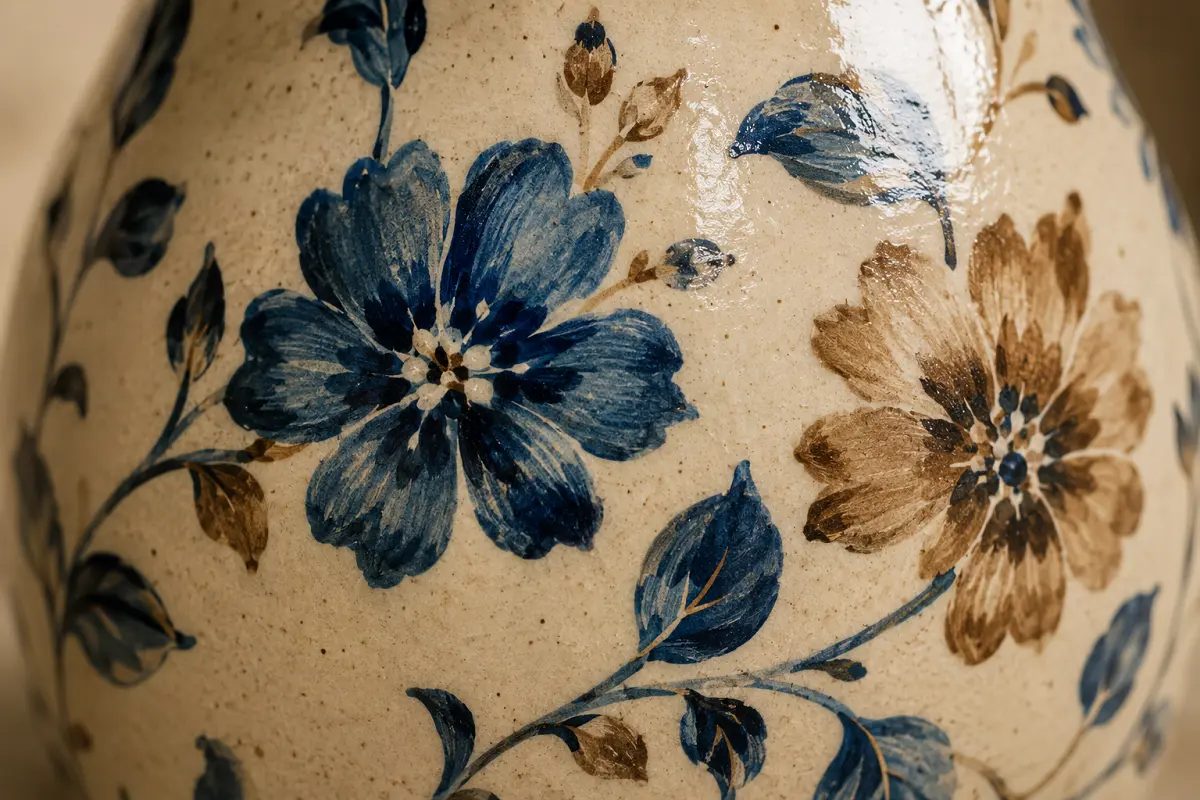
The important point is the body. Khurja ware is made from clay mixed with feldspar and quartz, then glazed and fired at a high temperature. That gives it a glassy finish and a sturdy, everyday feel. For the full background, see the history of Khurja pottery.
What is Jaipur blue pottery?
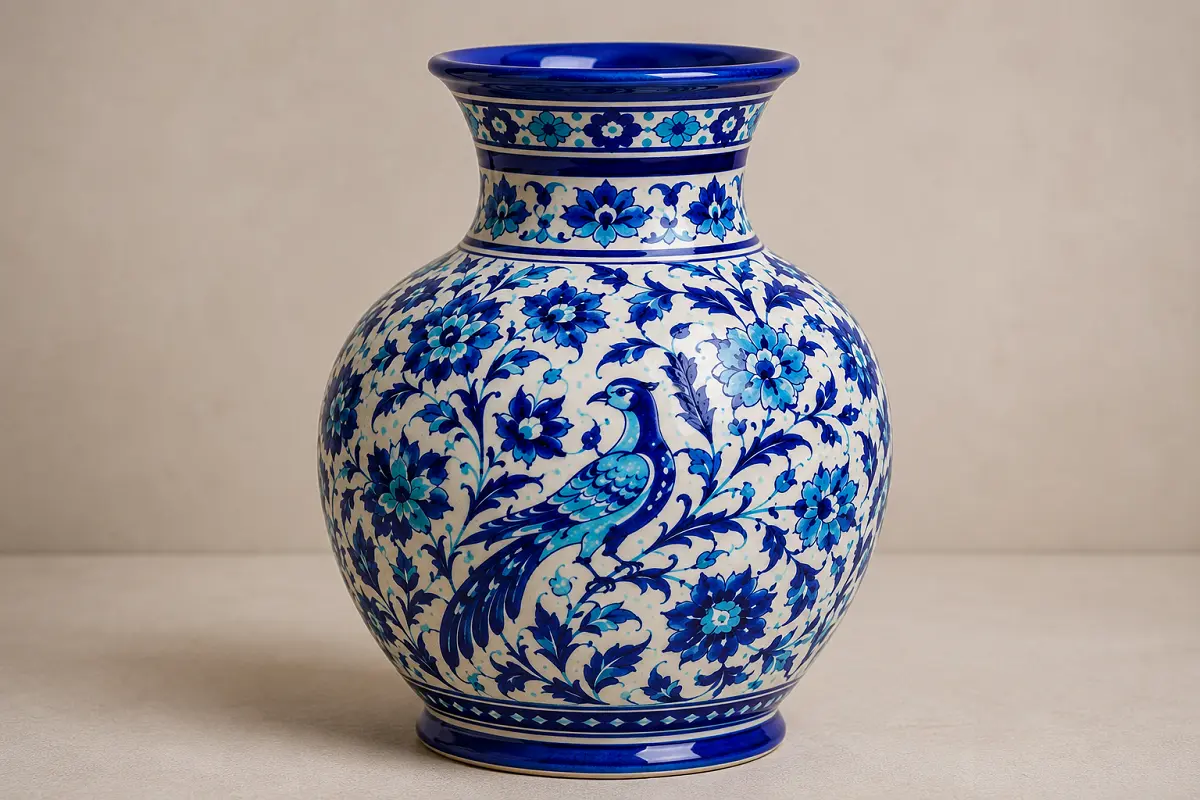
Here is where the names cause confusion. When most people hear “blue pottery,” they think of Jaipur. That is fair: Jaipur blue pottery is the more famous name for the craft, instantly recognised by its cobalt blue and turquoise colours.
But Jaipur blue pottery is made very differently. It uses no clay at all. The body is a frit “dough” of quartz powder, powdered glass, fuller’s earth, borax, and gum. It is glazed and low-fired, which makes it beautiful but fragile, so it is mostly used for decorative items like vases, coasters, tiles, and trinket boxes. The signature blue comes from cobalt oxide.
Khurja vs Jaipur blue pottery: the key differences
| Feature | Khurja pottery (blue-painted) | Jaipur blue pottery |
|---|---|---|
| Main material | Clay mixed with feldspar and quartz | No clay: frit of quartz powder, powdered glass, fuller’s earth, borax, gum |
| Firing | High-temperature glazed stoneware | Low-fired |
| Durability | Sturdy, made for daily use | Fragile, mostly decorative |
| Typical products | Mugs, dinner sets, planters, vases, tableware | Vases, coasters, tiles, trinket boxes |
| Signature look | Blue and brown florals on off-white | Iconic cobalt blue and turquoise |
| Everyday use | Suitable for eating and drinking | Better as decor, limited daily use |
| GI tag | Yes (Khurja Pottery, 2008) | Yes (Blue Pottery of Jaipur) |
Why the difference matters: durability and use
The material is not a technicality. It decides how you can actually use each piece.
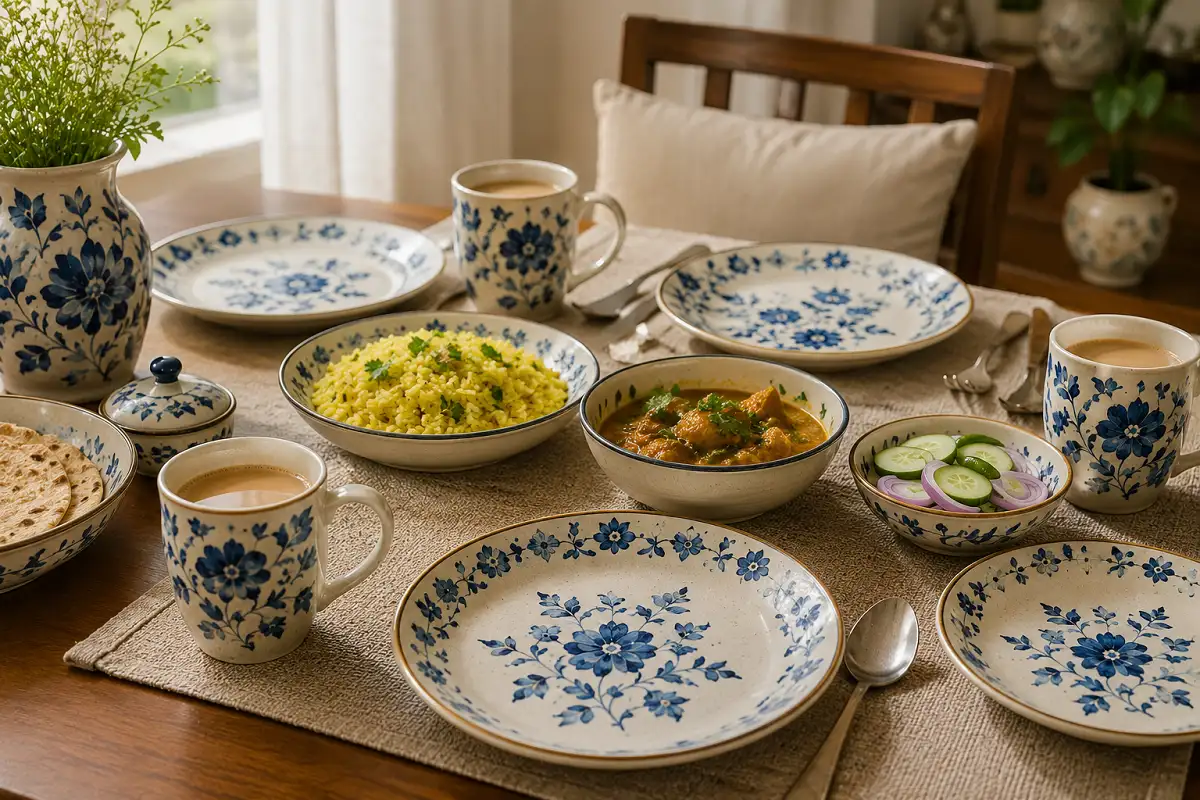
Because Khurja is clay-based and fired hot, it behaves like proper stoneware. It handles daily use, holds food and drink well, and survives a normal kitchen. That is why Khurja is known for dinner sets, mugs, and planters that you use, not just display.
Jaipur blue pottery, being low-fired with no clay, is lovely to look at but delicate. It chips and breaks more easily and is usually not suited to heavy daily use, microwaves, or dishwashers. It earns its place as decor and as collectible art.
Which one should you buy?
It depends on what you want the piece to do.
- Choose Khurja if you want durable, everyday ceramics: dinner sets, mugs, bowls, and planters that you can actually use. Browse our kitchenware and dinnerware and ceramic planters and pots.
- Choose Jaipur if you specifically want that iconic turquoise look as decoration and do not mind the fragility.
If you love the decorative, hand-painted feel but still want pieces that last, Khurja gives you the best of both. Our flower vases are a good example: decorative on the shelf, but durable stoneware underneath.
Shop Khurja Pottery · Chat on WhatsApp
Frequently asked questions
Is Khurja pottery a type of blue pottery?
Khurja is famous for blue and brown hand-painted motifs, but it is not the same craft as Jaipur “blue pottery.” Khurja is clay-based glazed stoneware, while “blue pottery” as a named craft refers to Jaipur’s no-clay frit ware. They simply share a blue, hand-painted look.
Which is more durable, Khurja or Jaipur blue pottery?
Khurja is more durable. It is made from clay, feldspar, and quartz, then fired at a high temperature, so it is sturdy and safe for daily use. Jaipur blue pottery is low-fired with no clay, which makes it more fragile and better suited to decoration than everyday handling.
Can you eat or drink from Jaipur blue pottery?
It can hold food, but it is fragile, low-fired, and usually not microwave or dishwasher safe, so it is better for serving dry items or for display. For everyday eating and drinking, glazed stoneware like Khurja pottery is far more practical and long-lasting.
Why is Jaipur pottery called “blue pottery”?
It is named for its striking cobalt blue and turquoise colours, which come from cobalt oxide. The blue is its identity and the reason it is instantly recognised. Khurja also uses blue, but as one of several motif colours, usually with brown, painted on a warm off-white ground.
Does Jaipur blue pottery contain clay?
No. Jaipur blue pottery uses no clay at all. Its body is a frit dough made from quartz powder, powdered glass, fuller’s earth, borax, and gum. That is why it is fired at a low temperature and stays fragile. Khurja pottery, by contrast, is genuinely clay-based stoneware.
Do both Khurja and Jaipur pottery have GI tags?
Yes. Both hold Geographical Indication tags that recognise them as traditional crafts of their regions. Khurja Pottery received its GI in 2008. Remember that a GI applies to the craft and region as a whole, not to any single product or seller’s individual items.
Which should I buy for my home?
For durable, everyday pieces like mugs, dinner sets, and planters, choose Khurja. For purely decorative items in that famous turquoise blue, choose Jaipur. The simplest way to decide is to ask whether you want pieces for daily use or mainly for display on a shelf.
Is Khurja or Jaipur blue pottery better?
Neither is better overall, because they are built for different jobs. Khurja wins on durability and daily use, thanks to its clay stoneware body. Jaipur wins on that signature decorative blue. Choose based on how you plan to use the piece, not on which name is more famous.